Freeway Navigation Mastery
Reviews
Description
Traffic Flow Dynamics
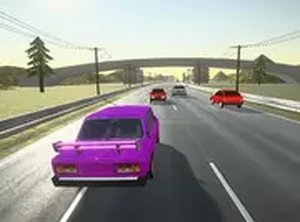
Freeway Navigation Mastery places you behind the wheel of a vehicle moving through dense, multi-lane highways. The core challenge revolves around reading traffic patterns and making split-second lane changes to maintain forward momentum. Unlike traditional racing games focused on speed alone, this experience emphasizes spatial awareness and predictive driving. Vehicles appear from multiple directions, requiring constant attention to both forward and lateral movement. The difficulty scales naturally as you progress, with traffic density increasing and vehicle speeds varying unpredictably. This creates a learning curve that rewards patience and observation over aggressive driving tactics.
Vehicle Progression System
Starting with a modest sedan, players accumulate points by successfully navigating through traffic without incident. These points unlock access to a garage of alternative vehicles, each tuned for different handling characteristics. Some cars offer tighter turning radiuses for quick lane changes, while others provide better acceleration for escaping tight spots. The progression system encourages experimentation, as different traffic conditions may favor different vehicle types. Unlocking all available cars requires consistent performance across multiple sessions, adding a layer of long-term motivation to each run.
Visual Design and Feedback
The game presents a clean, three-dimensional view of the highway environment. Road markings, signage, and surrounding vehicles are rendered with enough detail to convey a sense of realism without overwhelming the player. Visual feedback is immediate and clear: successful passes reward the player with a subtle score pop-up, while near-misses trigger a brief screen flash to heighten tension. The camera angle remains fixed behind the player vehicle, providing a consistent perspective that aids in judging distances. This visual clarity is essential for making the rapid decisions required at higher difficulty levels.
Control Scheme and Responsiveness
Input is handled through standard keyboard controls, with arrow keys or WASD managing steering, acceleration, and braking. The response curve is tuned to feel immediate but not twitchy, allowing for precise lane positioning. Braking is particularly important, as reducing speed can create space for safer lane changes in heavy traffic. The control scheme supports both casual play and more deliberate, strategic driving. Players can adjust their approach based on personal comfort, whether that means maintaining a steady pace or frequently changing lanes to find gaps.
Session Structure and Replayability
Each play session continues until a collision ends the run, making every attempt a fresh start with no carryover penalties. This structure encourages short, focused sessions that fit easily into a busy schedule. The increasing difficulty ensures that no two runs feel identical, as traffic configurations are procedurally generated. Players aiming for high scores must adapt to each new pattern rather than memorizing a fixed sequence. This procedural approach, combined with the vehicle unlock system, provides strong incentives for repeated play without relying on artificial barriers or timers.








Comments
Sign in to comment
You must be logged in before posting a review or rating.
No account? Create one
No comments yet. Be the first to comment!